Essay · 2025
The Portfolio Career: Building An Artistic Life
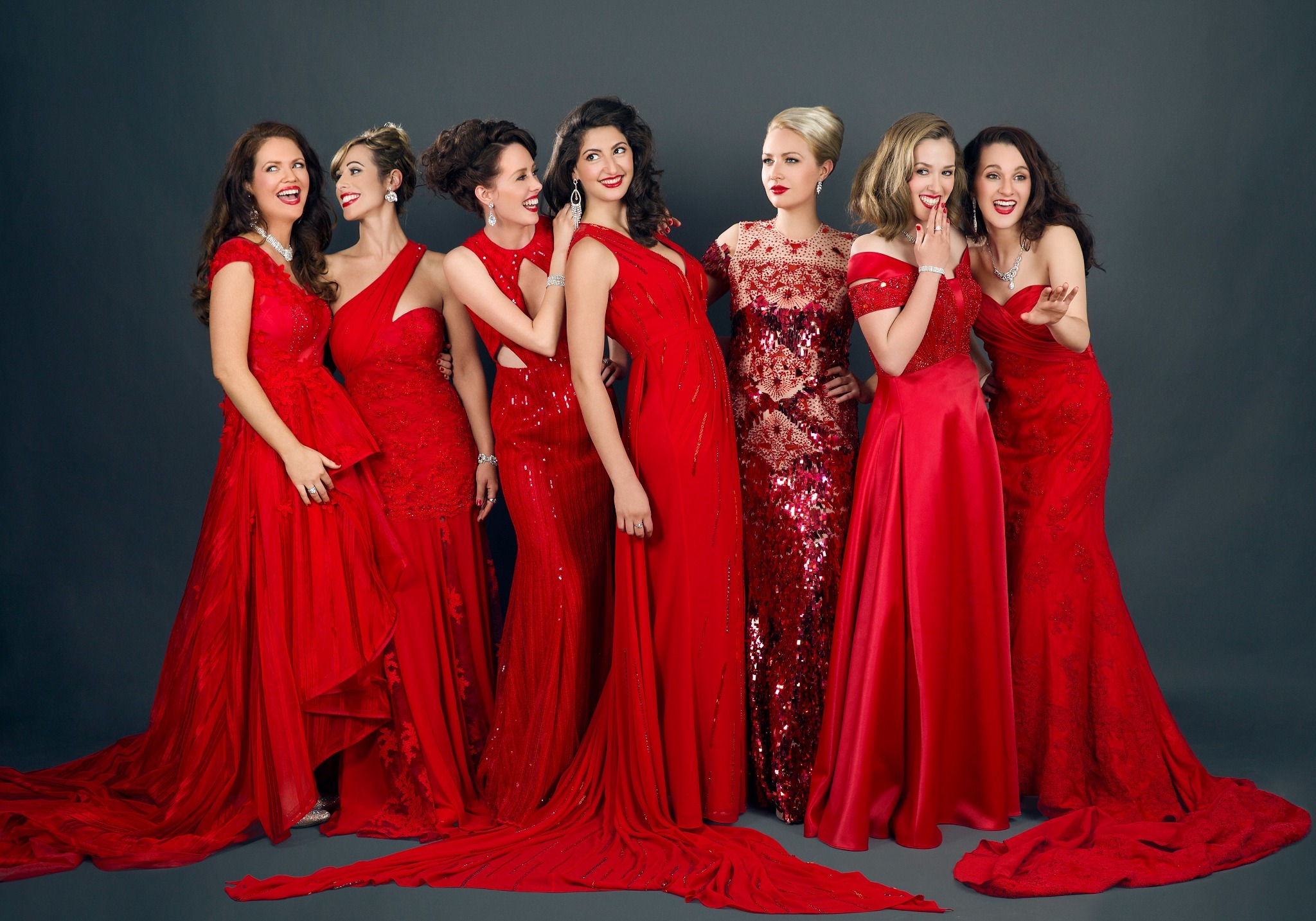
According to Creative Australia’s 2024 study titled “Artists as Workers: An Economic Study of Professional Artists in Australia” only 9 per cent of Australian professional artists work full-time solely on their creative practice. The other 91 per cent combine creative work with arts-related or non-arts work. Their average total income from all sources is $54,500—26 per cent below the wider workforce average.
For more than twenty years, I have lived what is now called a portfolio career. I have worked as an opera singer, actress, writer, director, dramaturge, producer, teacher, composer, artistic director, employer and company-builder—often several of those things in the same week.
During that time, I have had two companies Sirens of Song and The 7 Sopranos, both independent Australian performing-arts enterprises that have engaged more than five hundred opera and musical-theatre singers and delivered hundreds of professional engagements.
For many Australian artists, this kind of working life is not an alternative to the career.
It is the career.
For me, it began not with a business plan, an institution or a long-term strategy, but with a problem. In 2003, I was a young single mother trying to sustain a career as an opera singer.
The traditional operatic career demands mobility. I knew this life well.
I had lived, studied and worked across Australia and Europe for the previous decade and a half between Sydney, London, Rome, Madrid and Munich. I was lucky – I had debuted in both Europe and Australia, I had received grants, scholarship money, I had family support and I had never stopped working contract to contract from the time I left the Conservatorium – I really did count myself as one of the lucky ones. (Before anyone raises the entirely reasonable question of privilege: yes, I am deeply conscious that this path was made possible by an excellent education, extraordinary family support, scholarships and opportunities. I am writing separately about privilege and education in the performing arts, because that conversation deserves more than a parenthesis.)
However, opera singers were and still are expected to travel, relocate, audition constantly and sometimes disappear into productions for months at a time. It is an expensive career however you look at it. That model may work for some artists, but at that stage, reality hit hard and I could no longer build my entire life around an exclusively focused soloist career. I had a small baby in my arms and no savings to back me up. Not a cent to my name, in fact. I am not one to back down from a challenge and I was not prepared to stop performing. I was also not prepared to lower my artistic standards. And I did not believe that becoming a mother should require me to surrender the work for which I had trained. However, I also knew the realities and cost of bringing up a child in Europe. I wanted to be in Australia at that time. So, I had to create another way.
Building the portfolio career
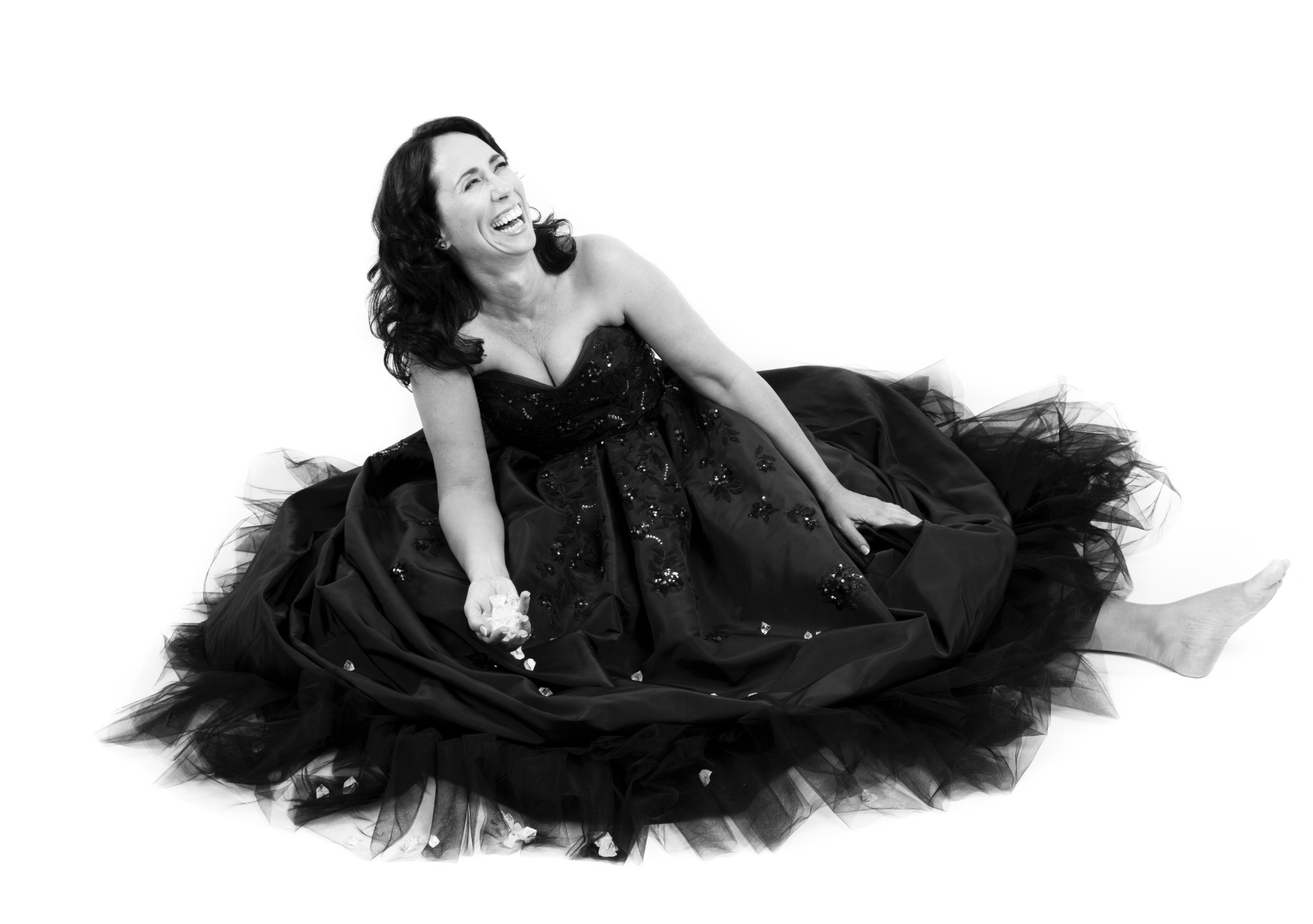
I founded Sirens of Song with a friend who was also a young mother, initially so that we could both continue singing while raising our children. It was never intended to replace my performing career, but to supplement it. Throughout those years in my mid to late thirties, I continued working as a freelance soloist, singing roles with opera companies, orchestras and undertaking concerts and other professional engagements.
Every time I saved or made money, I put it into the business. I could see its value in helping me craft a future practising my art. I don’t think I knew it at the time, but I was starting to develop skills beyond performance—in writing, directing, producing, programming and artistic administration and leadership.
Together, these skills became the portfolio career that allowed me to remain a working artist in Australia.
Sirens of Song became one strand of a much broader portfolio career—one that combined performance, teaching, producing, writing and artistic leadership.
I was still pursuing the career for which I had trained, but I was also beginning to build a structure that allowed me to work differently. I quickly learnt the personal cost of combining principal roles, freelance employment and the demands of raising a family. The problem was not a lack of ambition or discipline. The problem was that the existing professional structure offered very little flexibility. Nor did I have weeks to devote to grant writing.
As a freelance singer and single mother in the early 2000s, every week spent preparing an application was a week in which I was not performing, auditioning, earning, producing or caring for my family. The most practical path was to begin creating the work myself.
Sirens of Song gradually became something larger than the solution I had first imagined. Eventually I realised I could not take all the work that was coming in myself. So, it then became a way for other women to work professionally without abandoning their families, relocating overseas or leaving Brisbane, Sydney, sometimes Melbourne in search of meaningful opportunities.
Some were young singers receiving their first substantial professional engagement. Some were mothers. Some needed work between contracts with larger companies. Others were exceptional artists for whom the traditional career pathway was simply not practical. Many of these singers were my friends and colleagues. It felt so good, so satisfying to be able to ring people who were in a similar position to me and say – “hey, I’ve got this gig – are you available?”
They did not need to leave Australia to prove that they were artists worthy of a stage. We could create serious work for them here.
Creating an identity
From the beginning, I understood that the ensemble needed a strong visual and musical identity.
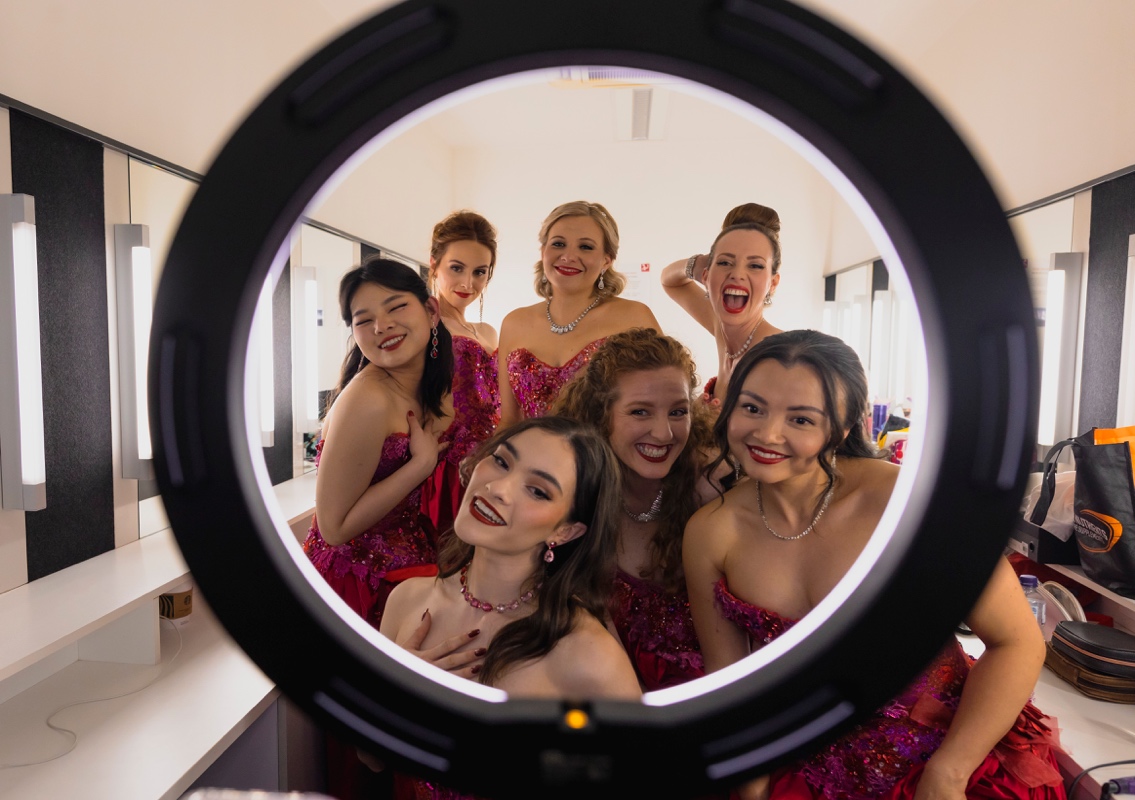
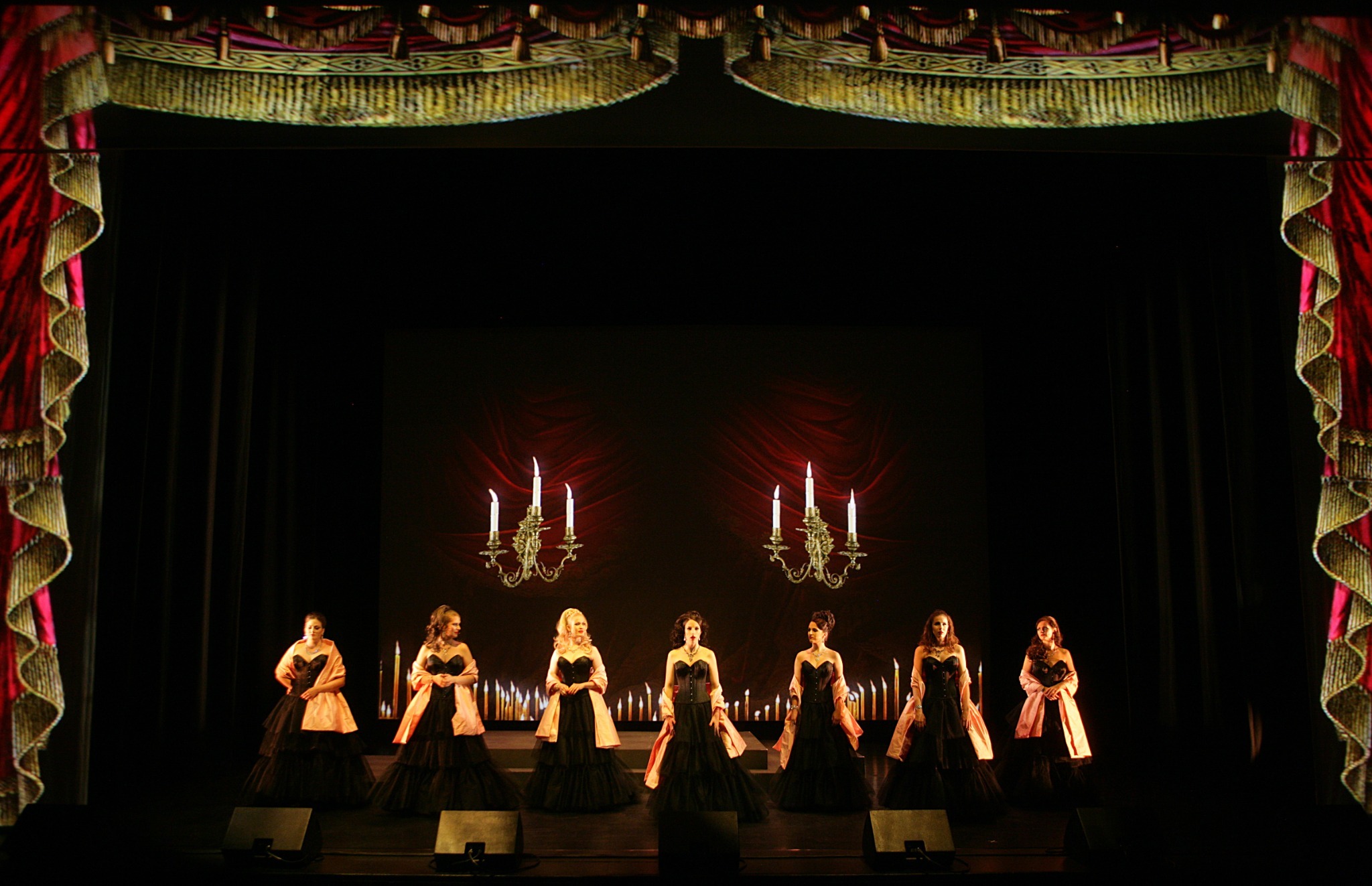
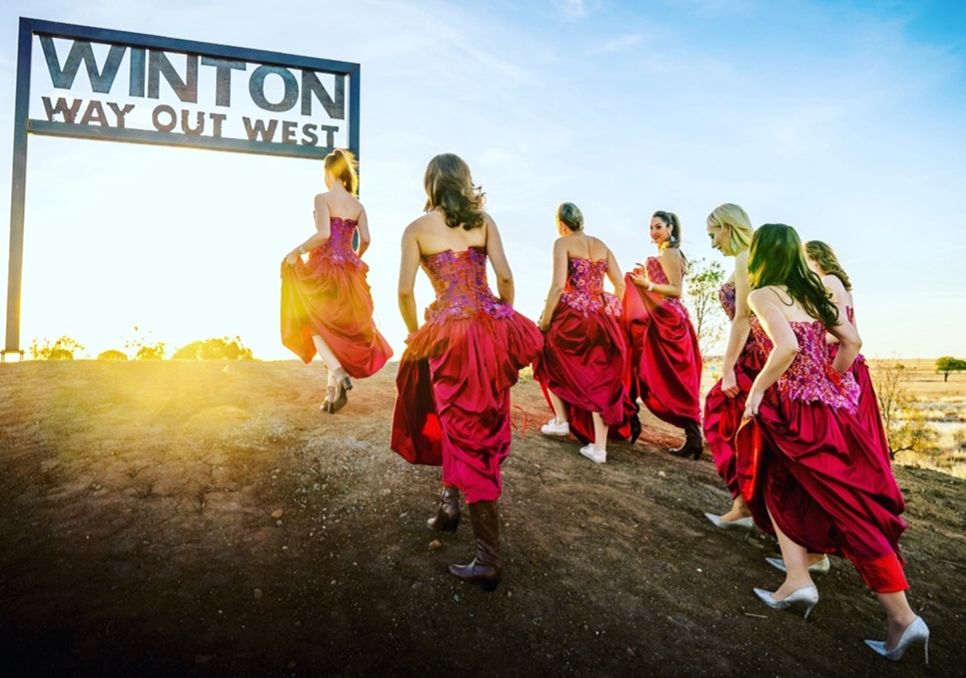
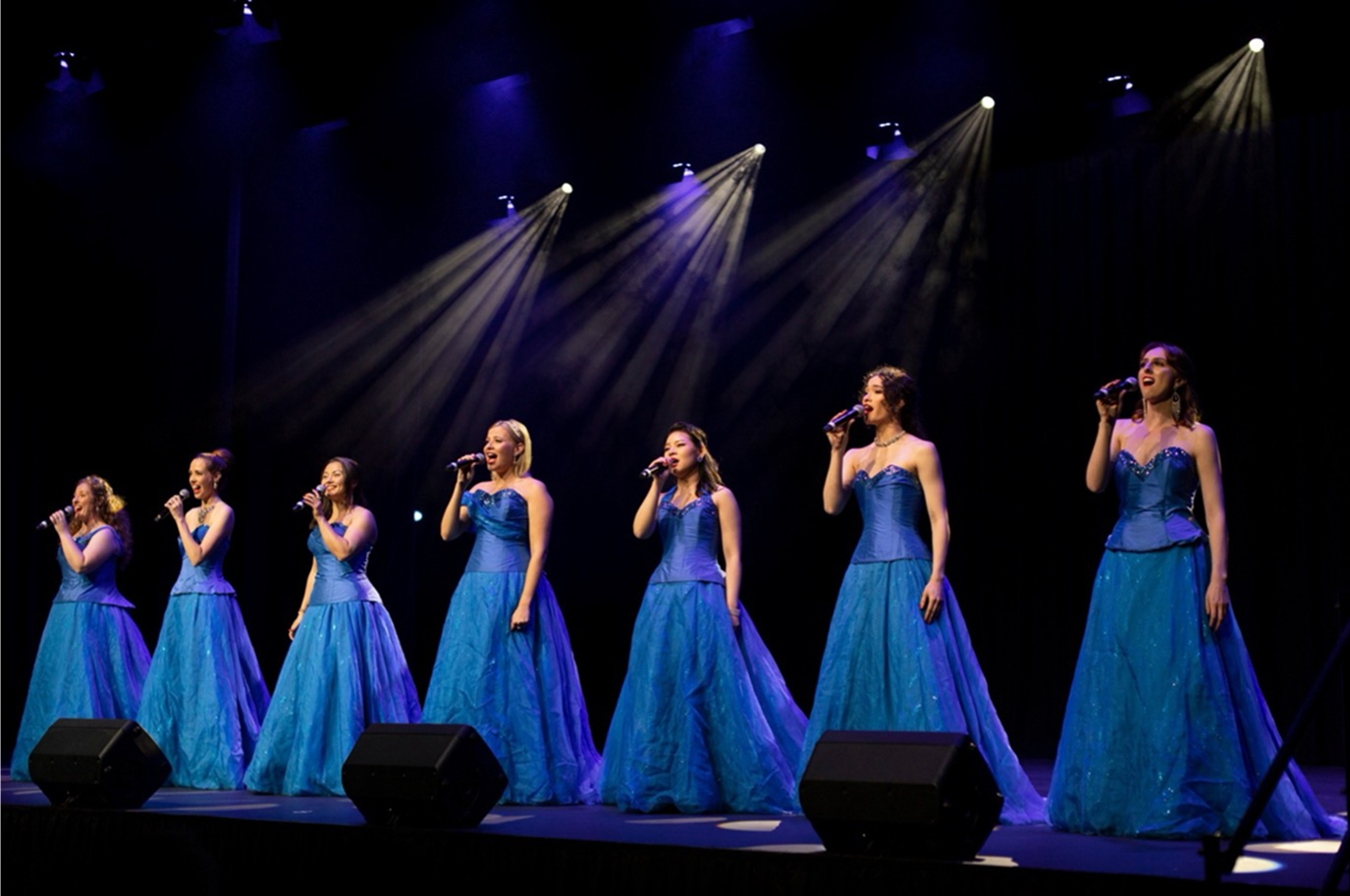
Working with the acclaimed fashion designer Richard de Chazal, screen imagery of Marilyn Monroe and Jane Russell became the inspiration. Together, we created the iconic red gowns and distinctive visual language that audiences came to recognise immediately as Sirens of Song and eventually The 7 Sopranos. The gowns were not frivolous decoration. They formed part of an intentional artistic identity. Long before the arts sector became comfortable talking about branding, we understood that audiences needed to know who we were from the moment we walked onto the stage.
The image was glamorous, and the vocal expectations then were serious. Musically, we refused to be confined to a single genre. We performed opera, Broadway, film music, popular classics, sacred works and contemporary songs. The aim was never to dilute operatic singing. It was to take exceptional voices beyond the traditional concert hall and reach audiences who might never otherwise buy a ticket to an opera.
I believed that great singing did not lose its value when it was presented with theatricality, colour, humour or accessibility. In fact, it could gain new life.
Becoming The 7 Sopranos
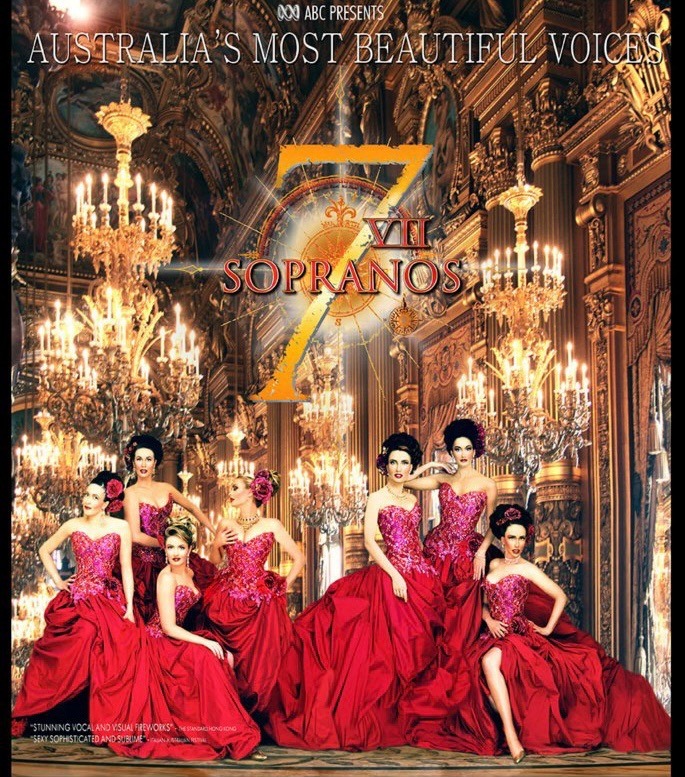
By 2009, the idea had evolved into The 7 Sopranos.
Our first corporate gig was for Johnnie Walker in Perth. It was a success. The ensemble then went on to perform on the top of the Angkor Wat in Cambodia, another international corporate event for a law firm, then it was IBM computers, Audi, Gucci, Cartier - the list went on. We then appeared throughout Australia and toured internationally. Our debut self-titled album with ABC Classics topped the worldwide classical crossover charts, and the ensemble subsequently released a second album, a few years later.
We became known as the “Showgirls of Opera” combining good singing with theatricality, glamour and accessibility.
We travelled through virtually every major regional centre in Queensland, New South Wales and Victoria, as well as performing in Brisbane, Sydney and Melbourne.
Internationally, the work took us to Singapore, Hong Kong, Shenzhen, Shanghai, Seoul and Dubai, and New Zealand.
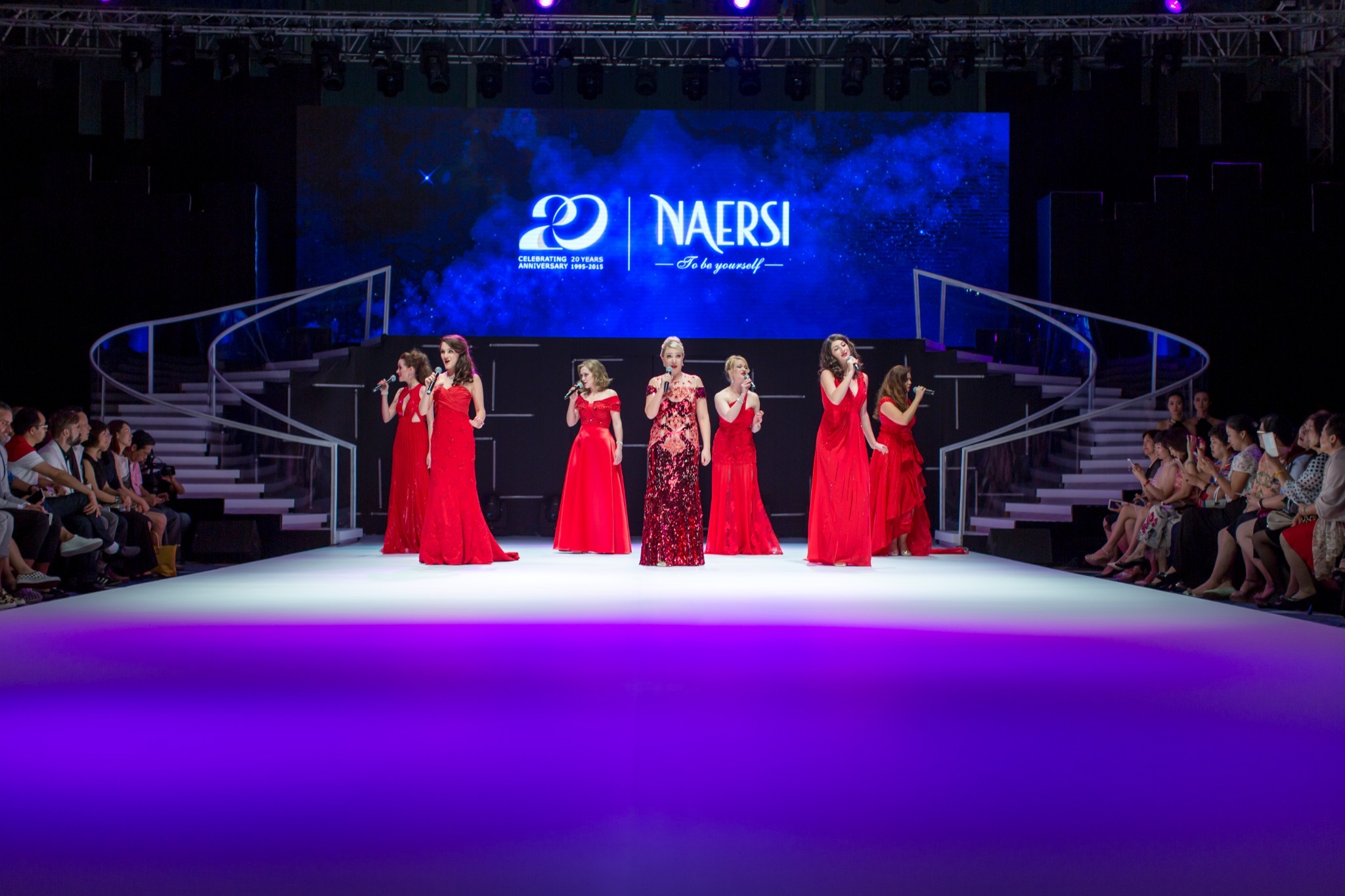
The margins were often modest, but we could pay the artists and usually retain enough income to begin developing what came next. Artistic ambition and financial responsibility were never separate tasks. Every creative decision had to be understood in relation to both.
The work moved between worlds that are often treated as though they are entirely separate: opera and entertainment, artistic ambition and commercial reality, regional touring and international performance.
I never saw those worlds as incompatible.
A singer could perform Mozart one night and a film classic the next without compromising the integrity of either. An audience could be entertained and still encounter extraordinary vocal artistry. Glamour and excellence did not need to be opposites.
The most important things were that the singing remained exceptional, that the artists were paid and that the audience felt something.
Making new work
From around 2014, I met and invited the producing house Cre8ion to collaborate with me on creating shows for The 7 Sopranos to tour.
The 7 Sopranos had been invited to perform at the Dubai Shopping Festival for ten days with performances every day. I was performing, company managing and producing – and I decided from a *previous experience that I really needed assistance. [*I remembered a previous experience in Hong Kong where I was breast feeding by night, doing five shows a day and managing six artists on the other side of the world, then flying on to Taipei for a different contract with two children in tow – it was too much.]

The productions we collaborated on with Cre8ion as producers included Reverie, staged by Stuart Maunder (one performance only), Brava! and Songs from Stage and Screen. Thanks to our collaboration we were able now to tour and our productions travelled to more than 80 regional venues and Brava! was also presented internationally.
Creating these shows required far more than assembling a series of songs.
They needed concepts, scripts, arrangements, costumes, staging, lighting, rehearsal structures, marketing materials and a clear understanding of the audiences for whom they were being created.
Over time, I became not only a singer, but a writer, director, co-producer, artistic director, employer and builder of theatrical worlds. I worked with long-time collaborator and Music Director, Glenn Amer, and commissioned hundreds of wonderful vocal arrangements that can be heard on ABC Classics today, and our original self-titled album.
I did not set out with the intention of acquiring all those skills.
I acquired them because the work required them.
That is one of the largely unseen realities of independent artistic life. You begin by wanting to sing and act. Before long, you are also writing, directing, managing budgets, booking flights, negotiating contracts, organising rehearsals, approving photographs, writing publicity, solving costume emergencies and making sure everyone is paid.
The art remains at the centre, but an enormous structure must be built around it before the audience ever takes its seat.
These are not peripheral skills. They are the work of running a company.
A business designed to breathe
I realised along the way that the business had to expand and contract according to the needs of my family and my life.
My work was designed to breathe.
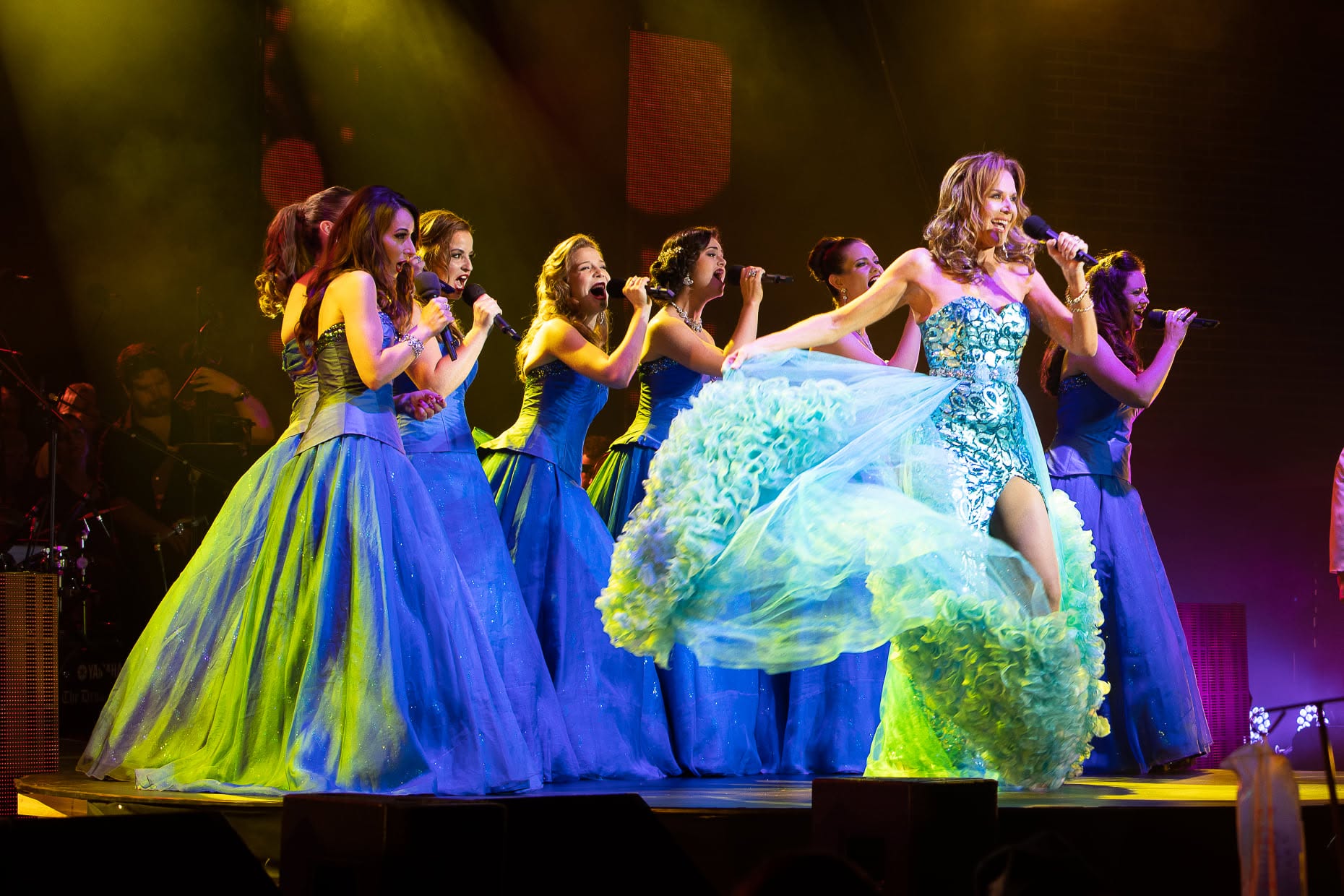
When circumstances allowed, I could build a major production, record an album or undertake an extensive tour.
When my children, caring responsibilities or other creative work required more of me, the business could become smaller without disappearing.
That flexibility was not a failure of ambition, professionalism or commitment.
It was the reason the enterprise survived.
Traditional definitions of success often privilege constant expansion: more employees, more performances, larger offices, bigger budgets and an ever-growing annual program.
But growth is not always linear, particularly when a company is built around human lives.
Sometimes leadership means expanding. Sometimes it means consolidating. Sometimes it means allowing the work to become quieter while a child, a parent, a family member or another creative project requires attention.
The ability to contract without collapsing is not weakness. It is resilience.
Because the company was project-based, I could engage the right singers for each production and pay them for their work without asking them to make a permanent commitment to the ensemble.
This was a model created by working mothers for other working artists.
It recognised that a singer might also be a parent, a carer, a teacher or a performer moving between several different artistic lives.
It did not ask women to pretend that those realities did not exist.
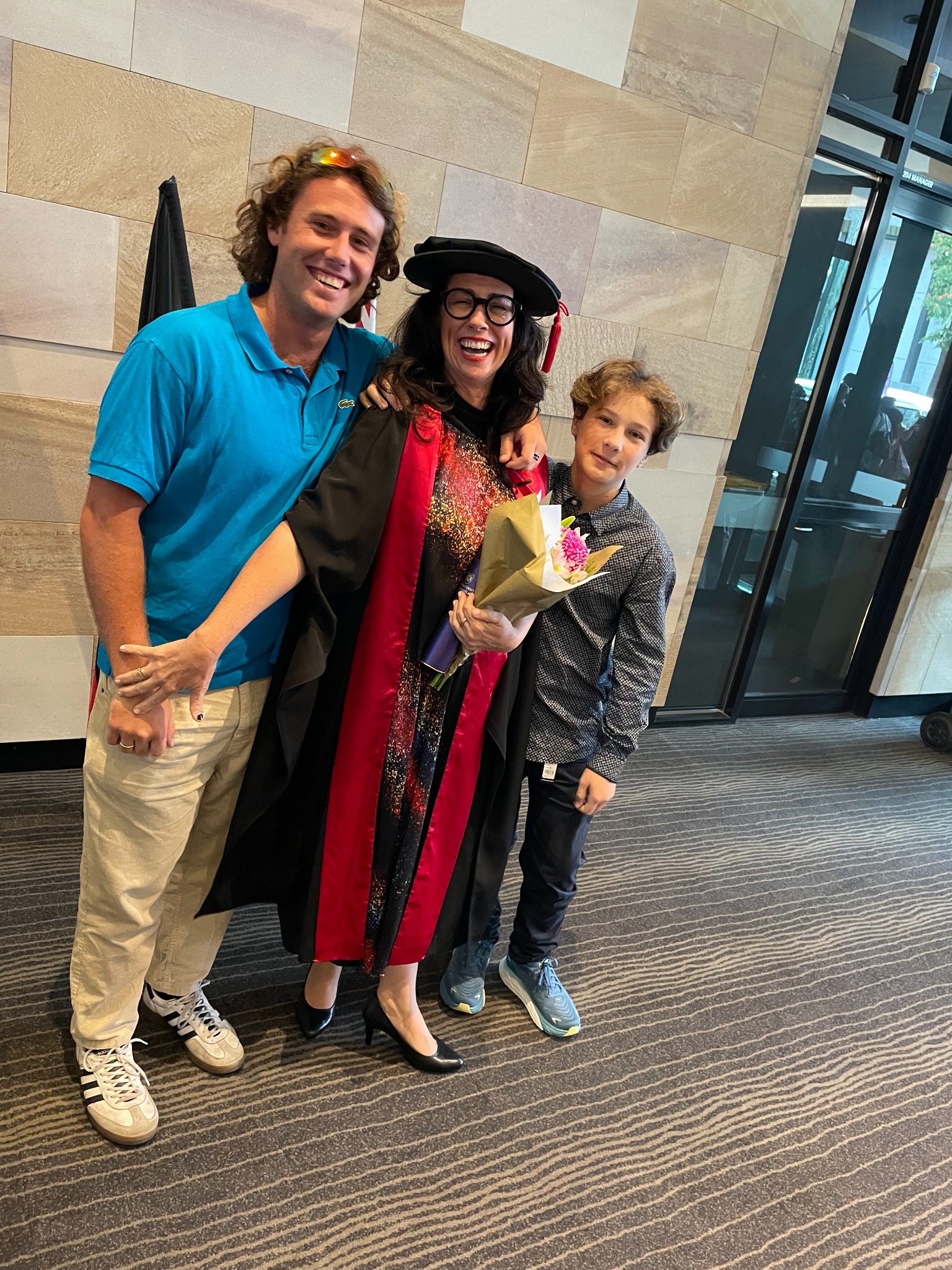
What I created instinctively in 2003 has since become recognisable as the dominant reality of Australian artistic life: the portfolio career.
Creative Australia's Artists as Workers report describes a gradual shift away from steady employment towards a "portfolio career" — a multifaceted working life made up of diverse contracts and roles. The phrase is useful, but it sounds neater than the reality.
A portfolio artist is constantly piecing together creative work, arts-related work and other income, while also carrying the costs, administration, uncertainty and care responsibilities that a conventional employer would normally absorb.
A professional structure that accommodates several forms of work is not peripheral to an artistic career.
For most artists, it is the career.
More than 500 singers
Across Sirens of Song, The 7 Sopranos and their associated projects, more than 500 singers were engaged.
A number like that matters to me.
Behind it are hundreds of individual stories.
There were young women gaining confidence and experience on professional stages. There were mothers returning to performance. Mothers who were still breast feeding. Mothers whose husbands were standing side stage.
There were singers building careers while remaining close to their families. There were artists working between major contracts and others discovering where their voices might lead them or seeing if their debilitating nerves or injuries could sustain a career on the stage.
For some, the ensembles provided their first substantial paid professional engagement, or overseas engagement.
Others developed the repertoire, confidence, stamina and stagecraft required to pursue solo careers. Some are now singing overseas or working with established companies. Others moved into teaching, singing full time in opera choruses, directing, producing or entirely different professions.
I do not claim responsibility for the careers they subsequently built. Artists create their own paths through talent, work and perseverance.
But I am proud that our companies could provide a stage, a fee, an audience and a professional opportunity at an important moment in their development.
The number of individual singers tells only part of the story.
Across more than two decades, the ensembles created hundreds of paid engagements, often employing multiple singers at a time in different cities. In many years, we also undertook one or two tours, requiring artists to rehearse, perform, travel and operate together as a professional company.
The work was not occasional or symbolic.
It was recurring professional employment.
Even when we performed for charity, I generally ensured that the singers received at least a stipend. Artists may choose to contribute their gifts to a cause, but their generosity should not be confused with an absence of professional value.
Not every artist follows the same path, and not every valuable professional experience must lead to international stardom to count.
A career in the performing arts is made up of many stages, many forms of work and many moments in which another person says: you belong here; your voice is worth hearing; you are ready to be paid for what you can do.
I wanted my companies to provide some of those moments.
The opportunity to work — to rehearse, perform, tour, record, collaborate and be paid — is not incidental to an artist's development.
It is how artists become artists.

Independence and its cost
For all of Sirens of Song's history and more than half of The 7 Sopranos history, I carried the creative, administrative and financial responsibility myself.
That independence gave me freedom.
I could move quickly. I could create work in response to the artists around me. I could build a company that reflected my values rather than conforming to someone else's structure.
But freedom has a cost when there is no institutional safety net.
It means being responsible for the arrangers, musicians, rehearsal rooms, costumes, designers, photographers, publicists, travel, accommodation and deposits required before a performance takes place.
It means accepting responsibility for paying artists even when ticket sales disappoint.
It means investing years in repertoire, intellectual property, audience development and professional relationships while also raising a family and sustaining one's own creative practice.
I have loved the journey.
The company taught me more than I could ever have imagined. It taught me how to make decisions, how to lead a room, how to recognise talent, how to read personalities, how to see if someone could work well in an ensemble, how to create an audience, how to build relationships with presenters and how to keep moving when something went wrong.
It taught me how to balance an artistic idea against the practical realities of a budget, a venue, a touring schedule and the needs of the people employed to deliver it.
It also taught me that carrying everything alone is not the same as being endlessly capable of carrying it.
The mythology of effortless success
When people see a polished performance, they rarely see what has been required to place it on the stage.
They see the gowns, the lights, the smiles and the apparent ease of the performance.
They do not see the months of planning, the financial risk, the last-minute changes, the emotional labour or the hundreds of decisions made before the curtain rises.
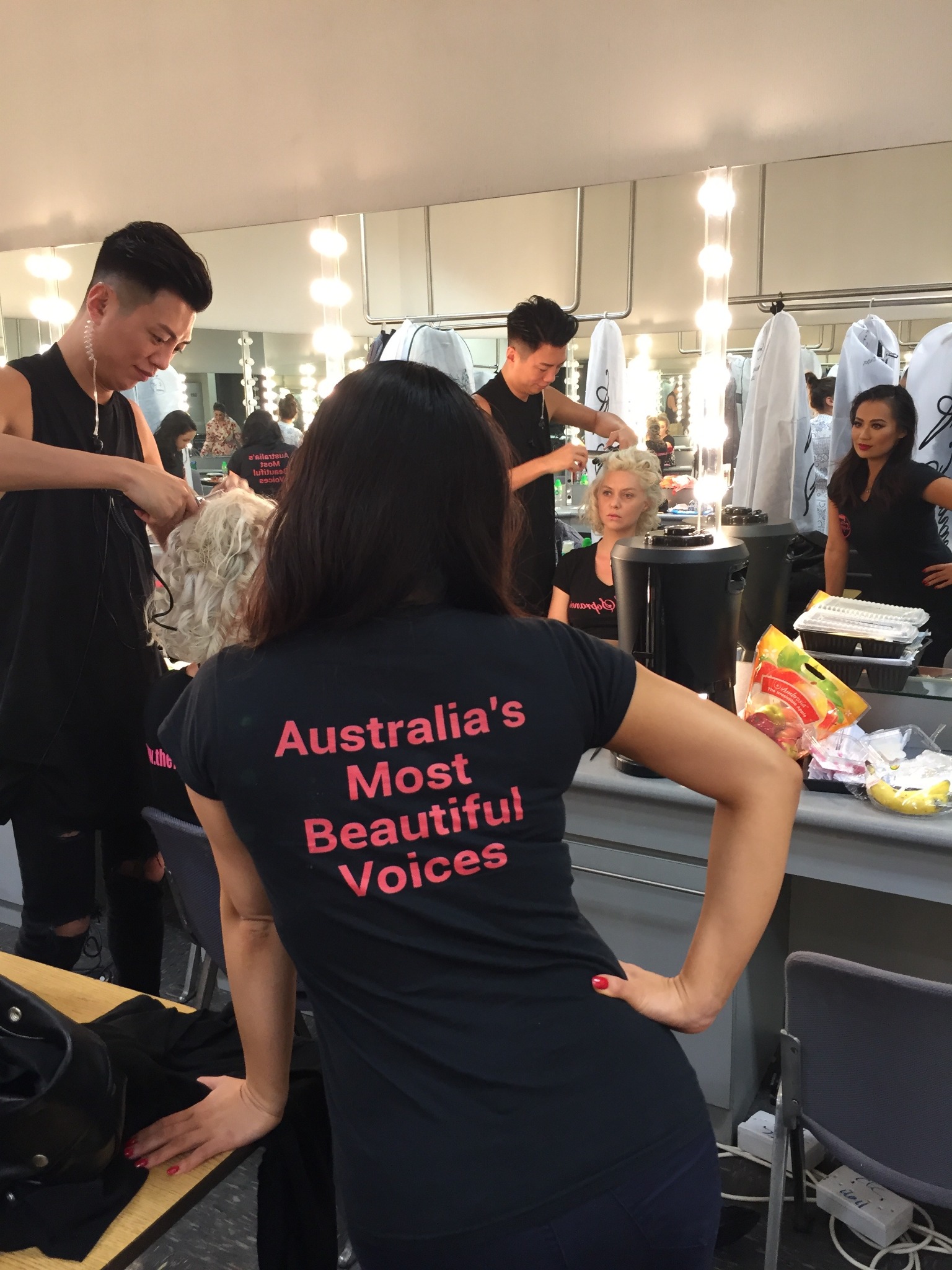
This invisibility can create a mythology around successful artistic enterprises.
If the work continues, it is assumed that the structure sustaining it must be secure.
If the artists appear confident, it is assumed that the person employing them must also feel confident.
If the company survives for many years, it is assumed that survival has become easy.
Often, the opposite is true.
Longevity can mean that one person has become increasingly skilled at absorbing risk without allowing it to become visible to anyone else.
I have often been that person.
People used to call me Wonder Woman because I seemed to do so much. I took it as a compliment — and perhaps, for a while, I even enjoyed the mythology of it.
But there is a danger in celebrating a woman's ability to carry everything. Eventually, people stop noticing how much she is carrying.
You see, Wonder Woman is tired now.
Not tired of singing, creating or building opportunities for other artists. Tired of the assumption that because she has always found a way to make everything work, she can — and should — continue carrying it all alone.
I have always wanted artists to feel safe, nurtured and protected. I have wanted audiences to feel welcomed and the work to appear effortless.
But making the work appear effortless does not mean the effort was not there.
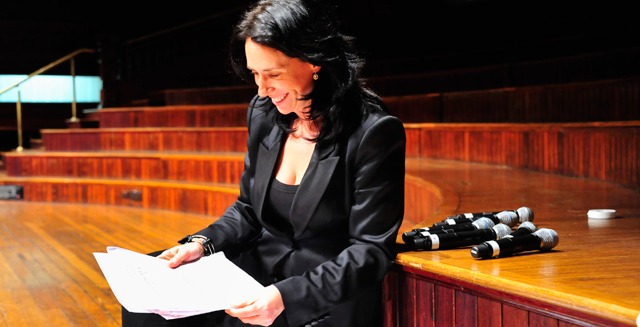
What should artistic leadership look like?
We often recognise artistic leadership only when it takes place within a large institution.
We understand the role of an artistic director who plans a season, leads a permanent organisation or oversees a major theatre or opera company.
But artistic leadership also occurs outside those structures, in an invisible way.
It occurs when an artist identifies a gap and creates the work that is missing.
It occurs when someone assembles performers, develops an audience, commissions arrangements, creates productions, builds relationships with presenters, tours to regional communities and turns an artistic idea into work that can survive beyond its opening night.
It occurs when a company is shaped around the realities of artists' lives rather than asking artists to reshape their lives around a company.
It occurs in hotel rooms, rehearsal studios, living rooms, hired halls and late-night conversations.
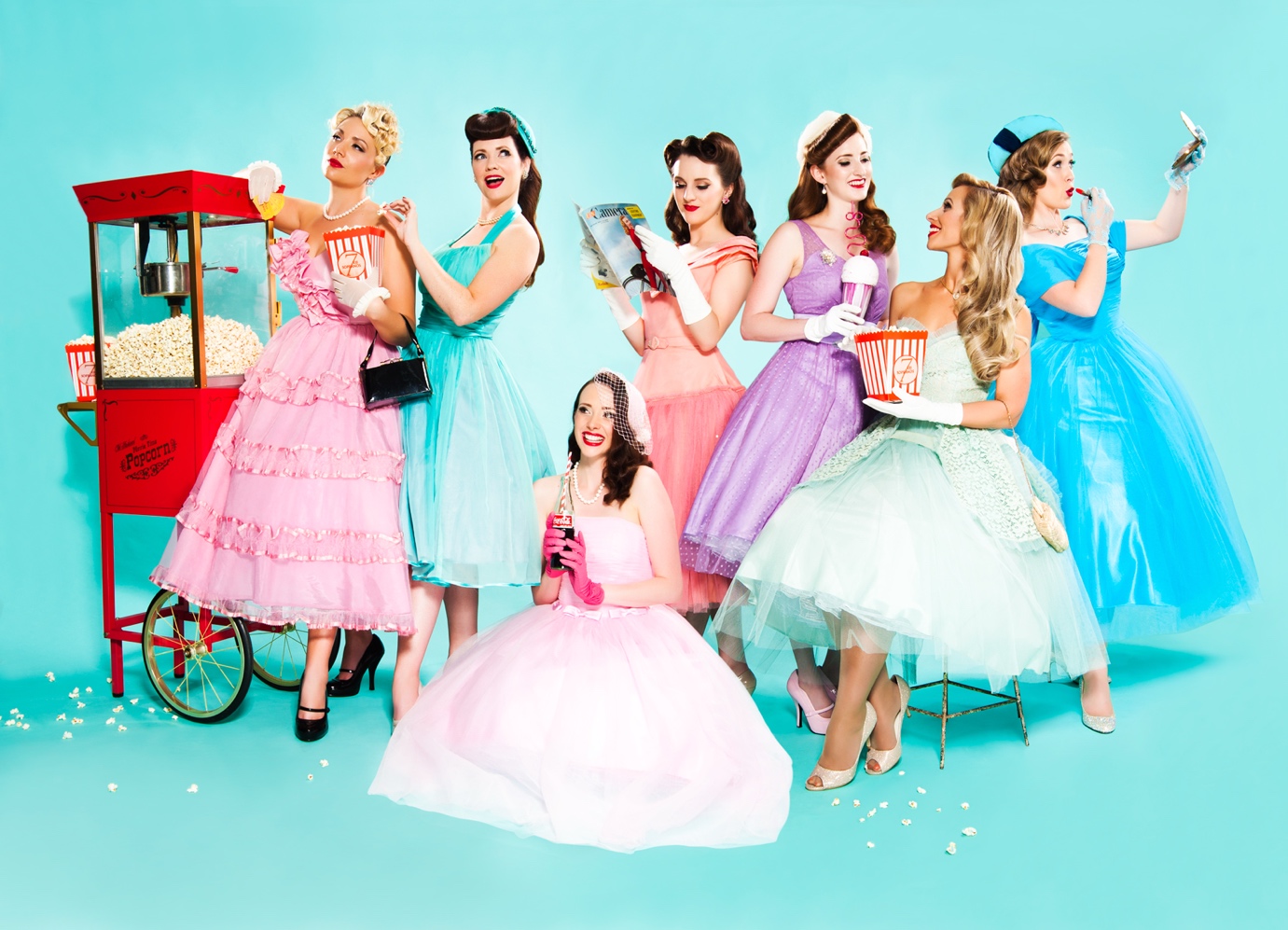
It can be glamorous on stage and improvised behind the scenes.
It can be ambitious without becoming enormous.
It can be flexible without being unserious.
Artistic leadership is not only the ability to select repertoire or announce a season.
It is the ability to identify and nurture artists, to gently push them to do better, develop audiences, build a healthy company around the work, manage the realities of production and touring, and hold artistic ambition and financial responsibility in balance.
Opera Australia's 2024–28 strategy describes its goal as nurturing and extending its "artform, audience and company equally". That triad captures the interdependent responsibilities of any opera company. None can remain healthy for long if the others are neglected.
The artform must be protected, challenged and developed.
The audience must be understood, welcomed and expanded.
The company must support the artists, technicians and administrators whose labour makes the work possible.
In different forms and at different scales, this is the work I have been doing for more than two decades.
My enterprise was never a smaller version of a major opera company.
It was its own thing.
Its value lay in its agility, imagination and ability to work differently.
Art as an act of giving
I love The 7 Sopranos. I love singing. I love theatre. I love opera, and I genuinely love my work.
At its heart, art is an act of giving.
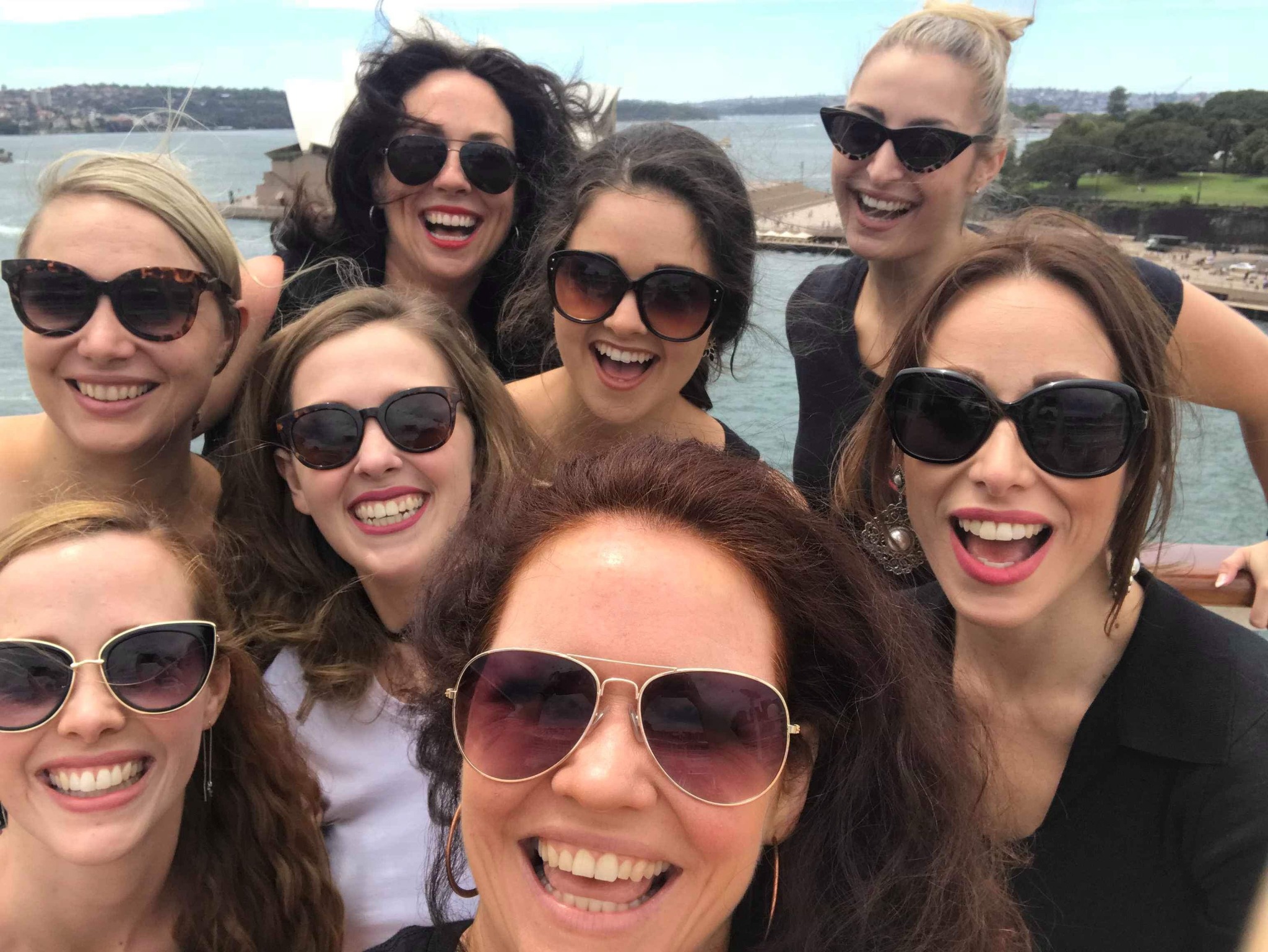
Artists want to share their voices, their words, their stories and their music. That impulse requires generosity, curiosity and deep empathy.
Yet the practical demands of independent artistic life can sometimes pull us away from the very qualities that made us artists in the first place.
When survival becomes the dominant impulse, artistic possibility can begin to contract.
We become producers, administrators, marketers, fundraisers and social-media creators. We move rapidly from one task to the next, trying to keep the work alive.
There is nothing wrong with commerce. Artists need audiences, and artists deserve to be paid.
But art cannot be nourished by survival alone.
It also requires contemplation, experimentation, trust, play, failure and time. Lots of time.
The challenge is to build structures that protect those things rather than consuming them.
An Australian tradition of initiative
There is a long history of Australian singers and artistic leaders taking opera beyond the structures in which it is conventionally presented.
In 1909, Nellie Melba undertook her celebrated "Sentimental Tour", presenting popular concerts in regional towns throughout eastern Australia and New Zealand. One of Australia's most internationally celebrated operatic singers did not regard accessibility, popular programming or regional audiences as beneath serious vocal artistry.
In 1935, after an international singing career, soprano Gertrude Johnson established the Australian National Theatre Movement. She modelled it partly upon London's Old Vic and Sadler's Wells and sought to provide training and employment at home for Australian performers who were being lost to larger European and American markets.
Under her leadership, the movement became a training ground for the artists who later populated Australia's national opera and ballet companies. Her story demonstrates how one singer's determination to build a missing structure can influence generations of artists.
Even the company that became Opera Australia began as an act of initiative rather than as a permanent institution. In 1956, a group of idealists — including butchers, pharmacists and newsagents — gave up their regular work to present four Mozart operas for the composer's bicentenary.
Regional touring was also built into the foundations of the national operatic story. An Australian Elizabethan Theatre Trust bulletin from April 1959 records that The Barber of Seville had completed a six-week country tour of Victoria and was embarking upon a further six-week tour of New South Wales. The Trust described it as both ambitious and expensive but justified the undertaking through the professional opportunities it created and the audiences it reached.
Regional touring, flexible presentation and artist-led enterprise are not peripheral to Australian operatic history.
The next generation
The future of opera in Australia will not be secured only by the work presented on the stages of our major companies.
It will also depend upon what happens before a singer reaches those stages, what happens when they leave an institution and what happens throughout the long professional life beyond. Where do young opera singers, musical-theatre performers and entertainers receive their first meaningful opportunities?
Where do they learn how to work with an audience, sustain a role, travel professionally and take responsibility for a performance whether it is in the chorus, on the concert platform or on the operatic stage?
How do they continue developing when they are not employed by a major company?
Where are the experienced artists and leaders passing on their knowledge?
Young artist development must amount to more than a title, occasional corporate appearances and the possibility of covering a role.
Emerging artists need proper remuneration, meaningful stage experience, sustained mentorship and genuine pathways into professional employment.
They also need opportunities to fail, recover, learn and perform again. No singer becomes an artist through training alone. Professional maturity develops through repeated encounters with repertoire, colleagues and audiences.
How do we create those opportunities in Australia?
And how do we enable singers to remain here rather than believing that significant careers can exist only overseas?
For the most part, that belief is still grounded in reality. But it is worth imagining an Australia in which our opera singers no longer feel that they must "get off the island" to build substantial careers.
The small-to-medium and independent sectors continue the tradition established by generations of artist-led companies and regional touring enterprises.
They are often the places where artists begin, return, experiment, reinvent themselves and find work between the larger milestones of their careers.
We cannot talk seriously about the future of opera while overlooking the ecosystems in which singers build their lives.
The portfolio life
This article is, in part, a record of what I have built over many years, and of the many artists who helped me build it. I am grateful to Theresa Famularo for the time she gave to The 7 Sopranos, but there were also many other unpaid friends who supported the work along the way: friends and colleagues such as Glenn Amer, Deborah Rogers, Natasha Veselinovic, Zoe Drummond and Kyla Allan. They were not only gifted artists, but generous and perceptive people who understood what I was trying to create — and, perhaps just as importantly, how much I was juggling whilst creating it.
It is difficult for anyone outside the Arts Profession, (I dislike the word "industry" when applied to the Performing Arts. It implies a thriving commercial enterprise, when the reality for most artists, anywhere in the world, is quite the opposite. The arts are a profession, requiring years of disciplined training, dedication and continual development, much like medicine, yet rarely afforded the same recognition, security or remuneration), to comprehend the number of unpaid hours, days, weeks and years that an artist can pour into building this kind of life. The visible work may be the performance, the production or the tour, but beneath it lies an immense accumulation of planning, writing, organising, problem-solving, emotional labour and financial risk that is rarely seen and almost never fully paid.
There is a personal thread here for me. In 1985, my father, Dr Peter Botsman AM, wrote the national Review of Arts Education and Training, which became known as 'the Botsman report'. More than forty years later, we are still asking whether our training institutions prepare artists not simply for a first job, but for the broad, uncertain and continually changing working lives they will actually lead.
Creative Australia has put it bluntly: "Creative workers are the original gig workers." A major Australian study of musicians describes the same reality from within the profession, observing that musicians are "using skills to make money, and using time to make art." Those two sentences that truly capture the dilemma of the portfolio artist. We develop a formidable range of skills in order to remain economically viable, while trying to protect enough time and energy for the art itself. The question is no longer whether artists need broad and adaptable training; it is whether our education, employment structures and public policy are prepared to recognise and support the working lives artists already have.
Of course, this is not the only work I have done in the arts, but it is — and has been — a substantial strand of a portfolio career spanning performance, writing, directing, producing, teaching and artistic leadership.
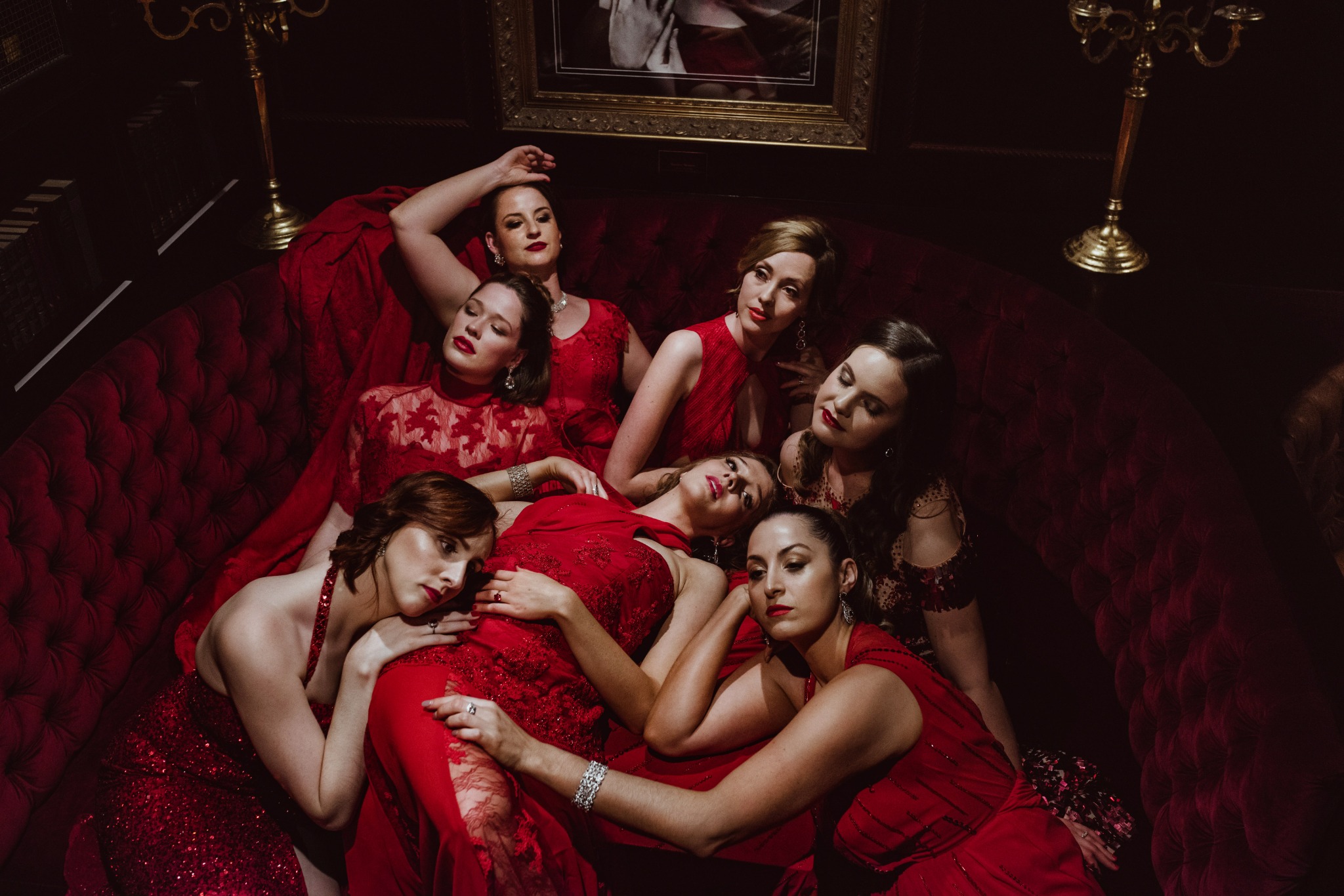
What began as a way for a young single mother to continue singing became a professional structure through which hundreds of other artists could work. It became regional and international tours, albums, original productions, costumes, scripts, arrangements, friendships, travel, audiences and opportunities. It became paid work. It became a portfolio career. It became an artistic life I could not find anywhere else. So, I built it, I funded it. I built it to accommodate motherhood, care, change and ambition. I built it to be flexible enough to breathe and strong enough to survive.
I built it because I believed extraordinary voices deserved to be heard — not only in opera houses, but in regional theatres, concert halls, corporate events and communities throughout Australia and beyond.
And I built it because sometimes the future of an art form does not begin with an institution.
Sometimes it begins with an artist looking at the life she has been offered, understanding that no single job will contain her work, and deciding to create another one.
Sources
- 1 Throsby, David, and Katya Petetskaya. Artists as Workers: An Economic Study of Professional Artists in Australia. Creative Australia and Macquarie University, May 2024. Accessed 5 August 2026.View source ↗
- 2 Opera Australia. Strategic Plan 2024–2028. Accessed 5 August 2026.View source ↗
- 3 Opera Australia. Opera Australia: About Us, including the history of the company. Accessed 5 August 2026.View source ↗
- 4 Dame Nellie Melba Museum. 1900 to 1909: Dame Nellie Melba Museum, including the chronology of Melba's 1909 Sentimental Tour. Accessed 5 August 2026.View source ↗
- 5 The National Theatre, Melbourne. The National Theatre Movement, 1935–1971. Accessed 5 August 2026.View source ↗
- 6 Victorian Government. Gertrude Johnson OBE. Victorian Honour Roll of Women. Accessed 5 August 2026.View source ↗
- 7 Australian Elizabethan Theatre Trust. Trust News, no. 1, April 1959. Accessed 5 August 2026.View source ↗
- 8 Botsman, Peter B. Review of Arts Education and Training. Canberra: Australian Government Publishing Service, October 1985. Print publication; subsequently referred to in parliamentary records as "the Botsman report."View source ↗
- 9 Australia Council for the Arts. Submission: Employee-like Forms of Work. Submitted to the Australian Government Department of Employment and Workplace Relations, 16 May 2023. Source of the statement "Creative workers are the original gig workers." Accessed 5 August 2026.View source ↗
- 10 Bartleet, Brydie-Leigh, Dawn Bennett, Ruth Bridgstock, Scott Harrison, Paul Draper, Vanessa Tomlinson and Christina Ballico. Making Music Work: Sustainable Portfolio Careers for Australian Musicians. Australian Research Council Linkage Report. Brisbane: Queensland Conservatorium Research Centre, Griffith University, 2020. The quotation "using skills to make money, and using time to make art" appears on page 78. Accessed 5 August 2026.View source ↗