Essay · 2026
An Artistic Inflection Point
Who will we become?
Australia's arts sector is contracting at the same moment that artificial intelligence is forcing us to reconsider the value of human creativity. We need to decide not simply what we are prepared to fund, but what kind of cultural life we want as a nation.
A profession whose economics no longer work
I have been thinking a great deal lately about what it means to have spent more than 30 years as a professional artist, and whether the conditions that allowed a career like mine to exist will be available to the next generation.
I made my operatic debut in 1994. More than three decades later, I sing less often (I diversified my skillset early on in my career), yet I am still occasionally offered performance fees remarkably close to those I received near the beginning of my career. In that time, almost every cost associated with being alive, let alone being an artist, has risen substantially.
There is something strange about accepting this as normal.
The American opera singer Andrew W. Potter recently reached the point at which he could no longer accept it. In a widely discussed OperaWire essay, "Why I'm Retiring from Staged Opera at 43", he explained that contracts offered in his forties were often worth less, dollar for dollar, than contracts his teachers had described from the 1980s. After 16 years of doing the sums, he concluded simply: "The math has never worked."
Research published by OPERA America supports his account. Singers must finance years of training, auditions, coaching, scores, agents' commissions, travel, accommodation and the continuing care of the body and voice. Mezzo-soprano Heather Johnson calls the resulting income "very expensive money". Baritone Edward Parks estimates that a singer may retain only half of the headline contract fee after professional expenses. Most troublingly, baritone Ryan Wolfe says he now knows artists who leave because they are getting work and still cannot pay their bills.
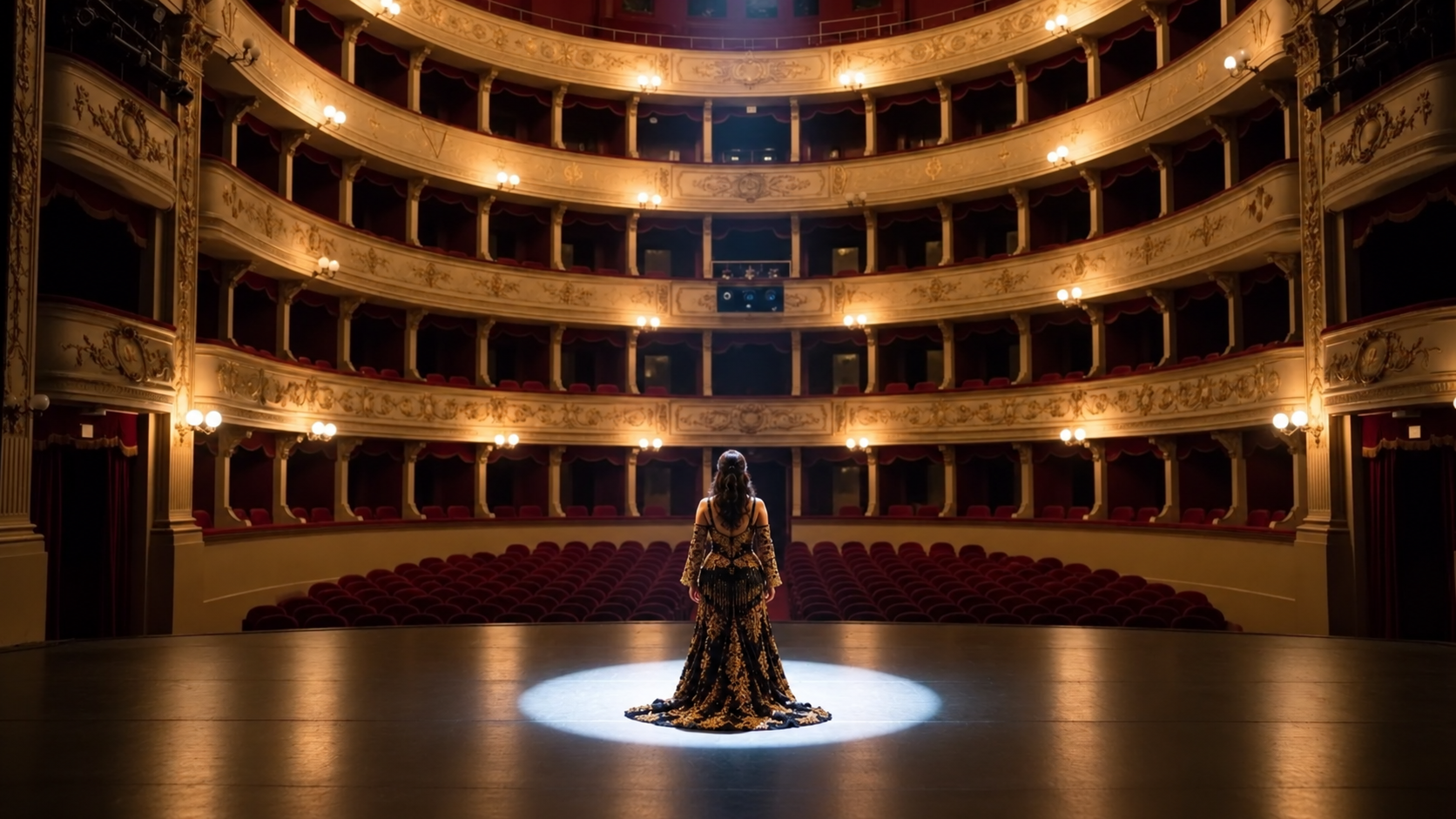
Our British colleagues face the same arithmetic, often under even harsher conditions. Opera Magazine reports that UK fees are generally lower than those offered by comparable companies in mainland Europe, the United States and Asia. Most freelance singers receive no separate payment for weeks of opera rehearsals, and travel and accommodation can consume a large share of the gross fee. Even Jonas Kaufmann has said that Royal Opera House fees did not meet the extraordinary cost of renting in London. These are not isolated inconveniences. They are signs of an employment model in which artists can work at the highest professional level and still subsidise the production themselves.
What does this mean in practical terms? A two-hour vocal recital, prepared properly, can take months. Repertoire must be chosen and researched, scores sourced, languages translated, music learned and memorised, the voice and body kept in condition, and hours spent coaching and rehearsing with a pianist. An operatic role may occupy an artist for months, sometimes years, before the first company rehearsal. That preparation is not an optional embellishment. It is the work that makes the performance possible.
An opera, play or musical may take years to create and more than a decade to rewrite, recompose and master. Yet we have become accustomed to an economic model that assigns value to the visible performance or artwork while treating much of the labour behind it as a cost the artist must absorb.
Cultural institutions under strain
At the same time, the structures supporting Australian cultural life are becoming more fragile.
In June, The Song Company announced that it would enter liquidation after 42 years. Only weeks earlier it had been performing Schütz under Roland Peelman. Four decades of repertoire, commissioning, specialist vocal expertise, employment and audience development ended not because the art form had suddenly ceased to matter, but because the organisation could no longer find a sustainable financial path.
Slingsby, the acclaimed Adelaide theatre company for young audiences, has announced that it will close after losing ongoing federal funding. Its Artistic Director Andy Packer said that the company's financial resilience was gone and warned that many Australian companies were close to failure.
The Australian Design Centre ceased operations on 30 June after 62 years supporting Australian craft and design, following the loss of the core funding it required to remain viable. In Victoria, ArtsHub reported earlier this year that eight established organisations unexpectedly lost Creative Victoria organisational funding, while others received only two years of support rather than the four years they had sought. The Creative Enterprises Program funding pool itself fell from $21.2 million in the previous period to $17.9 million for 2026–29.
The pressure is no longer confined to small or publicly subsidised arts organisations.
In the space of weeks, two major commercial musicals, Beetlejuice and Waitress, brought their Australian tours to an early end. Beetlejuice cancelled its planned seasons in Sydney, Perth and Adelaide after its producers concluded that increasing touring costs and a more cautious consumer environment had made continuing the national tour unsustainable. Waitress cancelled its Sydney season soon afterwards, with producer John Frost saying that attendance and box-office income were no longer sufficient to support the cost of the production. Back to the Future and Dear Evan Hansen had already curtailed Australian touring plans, and Live Performance Australia described the recent number of cancellations as unprecedented.
Commercial musical theatre is among the most market-tested and heavily capitalised parts of the performing arts. These large productions have substantial private investment, established titles, major marketing campaigns and broad audiences. Their scale makes them different from chamber ensembles and small theatre companies. Yet if productions of this size can no longer make national touring viable, the economics of live performance itself are under serious strain.
Tim Minchin has described the cost-of-living crisis as hitting theatre from two directions. Audiences have less discretionary income at precisely the same time as the cost of producing and touring work has risen sharply. He points out that "the margins are tiny"; all it can take is "selling 80 per cent of tickets instead of 90 or 100 per cent" for the economics of a production to become unsustainable.
Minchin's observation reaches well beyond musical theatre. Audiences may want to attend but cannot afford to do so as often, while productions cost substantially more to mount and tour. The viable margin is narrowing from both directions.
These organisations and productions have different histories and circumstances, and no single cause explains every closure, cancellation or financial crisis. Audience behaviour, inflation, touring costs, philanthropy and organisational expenses all play a part. Taken together, however, the evidence points to a broader contraction.
The Australia Institute estimates that, in real terms, Australian government funding for the arts has fallen by more than half a billion dollars a year, while arts employment has still not recovered to its pre-COVID level.
This is happening even though Australians have not stopped wanting art.
Creative Australia's 2026 National Arts Participation Survey found that almost all Australians engage with the arts in some form and that live arts attendance in 2025 reached the highest level recorded since the survey began.
Cost is increasingly the largest barrier to attending arts events and festivals.
The disconnect deserves much greater attention.
The people who create the work
The economic position of individual artists is even more revealing.
Creative Australia's Artists as Workers study found that only 9% of professional Australian artists now work full-time solely on their creative practice. Seventy-eight per cent work freelance or are self-employed in their principal artistic occupation. Their average total income from all sources is $54,500, 26% below the wider workforce average.
For artists aged 35 to 54, the years in which many practitioners have accumulated considerable expertise, average creative income was only $28,200 in 2021–22. The average cost of producing their creative work was $19,900.
For artists aged 55 and over, average creative income fell to $16,500.
These figures are extraordinary when we consider what experience means in an art form. A singer in her fifties may have spent 30 years studying languages, repertoire, stagecraft, style and technique. A director accumulates decades of knowledge about people, text, production, rehearsal rooms and audiences. A musician spends tens of thousands of hours with an instrument. A writer has lived long enough to say something different from the person they were at 25.
An artistic culture should preserve expertise. Artistic maturity often deepens with age, and many composers, writers and other creators have produced some of their most significant work in the later decades of their lives.
Yet the middle decades of an artistic life are often precisely when its economics become hardest to sustain. Children may require support. Parents require care. Mortgages and ordinary household expenses do not disappear because someone has chosen a vocation. Performing artists must also continue to invest in the body on which their work depends.
Retirement brings another problem. Freelance artists have spent decades moving through a patchwork of invoices, casual contracts, ABNs and short engagements. The Australian Taxation Office makes clear that having an ABN does not automatically remove an organisation's responsibility to pay superannuation. Contractors engaged principally for their personal labour may be entitled to employer super contributions.
Creative Australia found that only 46% of artists identified employer-contributed superannuation as part of their arrangements for future financial security.
Just 26% believed their overall arrangements would be adequate.
The cost becomes clearer at midlife. A superannuation contribution missed when an artist is 28 is not merely one lost payment; it is 30 or 40 years of compound growth that never existed.
An economic problem known since 1966
None of this should surprise us.
In 1966 economists William Baumol and William Bowen published Performing Arts: The Economic Dilemma, identifying a structural problem that has followed the live performing arts ever since.
In many industries, technology raises productivity. A factory can manufacture more goods with fewer people, and software can complete in seconds work that once took hours.
Live performance does not behave in the same way.
My late father served on the boards of several arts organisations, including the Australia Council. When I was a child, he told an after-dinner joke about an accountant put in charge of a symphony orchestra who, in pursuit of greater "efficiency", gradually reduced it to a small chamber ensemble. Increasingly, that is what the arts in Australia can feel like.
A string quartet cannot play Beethoven twice as quickly in order to double productivity. King Lear cannot be reduced to 45 minutes without becoming a different experience. A singer cannot prepare an operatic role to the same standard by simply halving the study required. The labour is part of the product.
Baumol described this as a permanent economic problem for the performing arts. Costs rise because artists and arts workers still live in the same economy as everyone else, but the fundamental productivity of live performance cannot increase at anything like the rate possible elsewhere.
That idea feels newly important.
For decades, one response to these pressures has been to make artists themselves extraordinarily flexible. We freelance, teach, direct, write, produce, administer, run businesses, apply for grants and create our own opportunities. I have spent my own career doing exactly that, and I value the freedom it has given me.
A portfolio career can be enormously creative. It allows artists to cross disciplines, create work outside established institutions and make the sector remarkably adaptable.
The difficulty comes when flexibility becomes the mechanism through which financial risk is transferred from institutions to individual practitioners.
The institution has salaries, offices, compliance obligations, marketing systems, strategic plans and governance structures. The artist increasingly arrives for the project, invoices for an agreed amount and absorbs the preparation, training, gaps between contracts and much of the future financial risk.
There is a faint echo here of the Gilded Age, although the comparison should not be pushed too literally. The arts are not nineteenth-century industrial America, and arts administrators are not railroad barons. The resemblance lies in the economic structure: sophisticated institutions can grow around a workforce whose security does not grow with them.
We should be willing to ask whether the balance is right. An arts organisation ultimately exists because somebody is making art, yet that relationship can become strangely obscured.
Benjamin Britten said on receiving the Aspen Award in 1964, "I want my music to be of use to people, to please them, to enhance their lives."
If we believe that artistic work has this kind of public value, then the people who make it cannot indefinitely be treated as the most elastic part of its economics.
AI changes the question
This would already be a serious cultural policy problem. Artificial intelligence makes it more urgent.
The World Economic Forum's Future of Jobs Report 2025 predicts enormous labour-market disruption by 2030. Almost 40% of workers' core skills are expected to change. Generative AI is already one of the forces pushing some creative occupations, including graphic design, towards decline. At the same time, creative thinking remains among the human skills employers expect to become increasingly important.
The paradox is one we have barely begun to confront.
We are developing machines capable of producing enormous quantities of images, text, music and other cultural material at the same moment we are told that human creative thought will become more valuable.
What happens when content is no longer scarce?
We may discover that the scarce things are attention, judgement, imagination, interpretation and genuine human encounter.
Pianist and writer Anna Goldsworthy explores this territory in her recent Quarterly Essay, The God We Made: The Threat and Promise of Artificial Intelligence. In an extract published by ArtsHub, she describes taking her child to hear a real choir after encountering sophisticated AI-generated music. The live voices were less perfect but vastly more moving. As she told him after the concert, "Music can be described by algorithms, but it is not contained by them."
As an opera singer first, I understand instinctively what she means.
A live voice is vibration and breath travelling through the body. It carries age, experience, health, fear, memory, imagination and emotion. It changes with the room, the acoustic, the conductor, the other performers and the audience. The possibility of imperfection is inseparable from the possibility of transcendence.
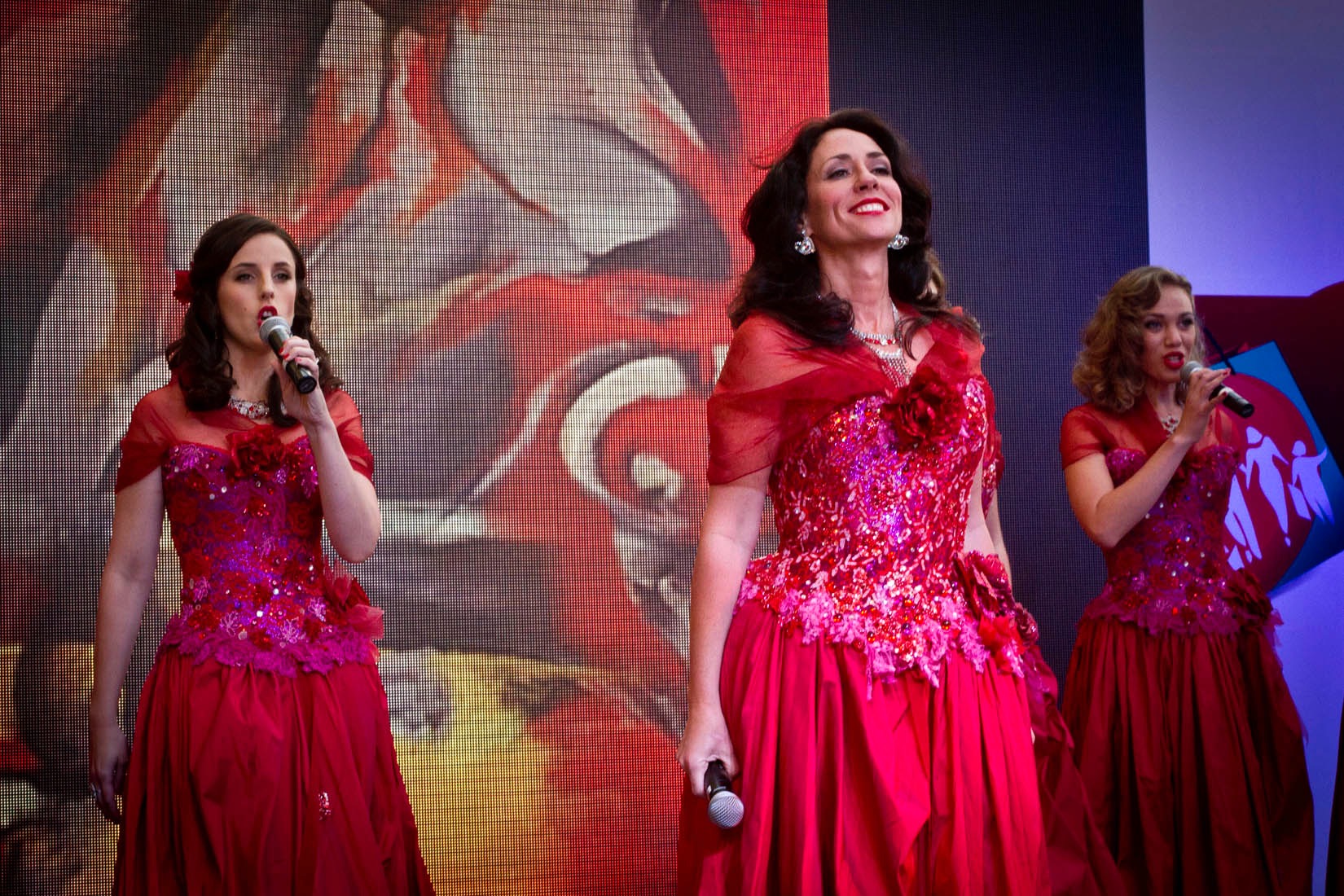
The same is true of theatre, dance and the moment when a pianist sits alone before an audience and begins to play. Perhaps AI will eventually reproduce much of this convincingly. But that is not the central question.
The more important question is why human beings have always made art. We create to understand, reflect, look more deeply and question.
Across cultures and throughout history, people have danced, painted, told stories and made music because creation is one of the ways we understand being alive.
We create to remember, mourn, protest, celebrate, imagine and communicate with people we will never meet. Sometimes we create simply because making something gives shape to an experience we cannot otherwise explain.
The rise of artificial intelligence therefore makes the humanistic case for the arts more important, not less.
If machines can efficiently produce an endless supply of competent cultural material, the purpose of teaching a child music cannot simply be to train that child to generate a musical product.
The purpose lies partly in what happens to the child through learning to make music. Years of practising an instrument teach patience, concentration, close listening, discipline, consistency and the acceptance that worthwhile things can take a long time to master.
There is also compelling evidence that musical training can physically shape the developing brain. A longitudinal study led by Krista Hyde found measurable structural brain changes after 15 months of instrumental training in early childhood, correlated with improvements in musically relevant motor and auditory skills. Later longitudinal research led by neuroscientist Assal Habibi found that children undertaking music training showed accelerated maturation of auditory processing after two years compared with children from the same socioeconomic background undertaking sports training or no systematic training.
Music education does not need to justify itself through better test scores, and not every claimed cognitive benefit is established. Its intrinsic value is enough. The science nevertheless reminds us that learning an instrument is an unusually rich human activity, bringing together hearing, movement, memory, attention, emotion, repetition and interpretation while the developing brain is extraordinarily plastic.
Who gets to become creative
This brings me back to education.
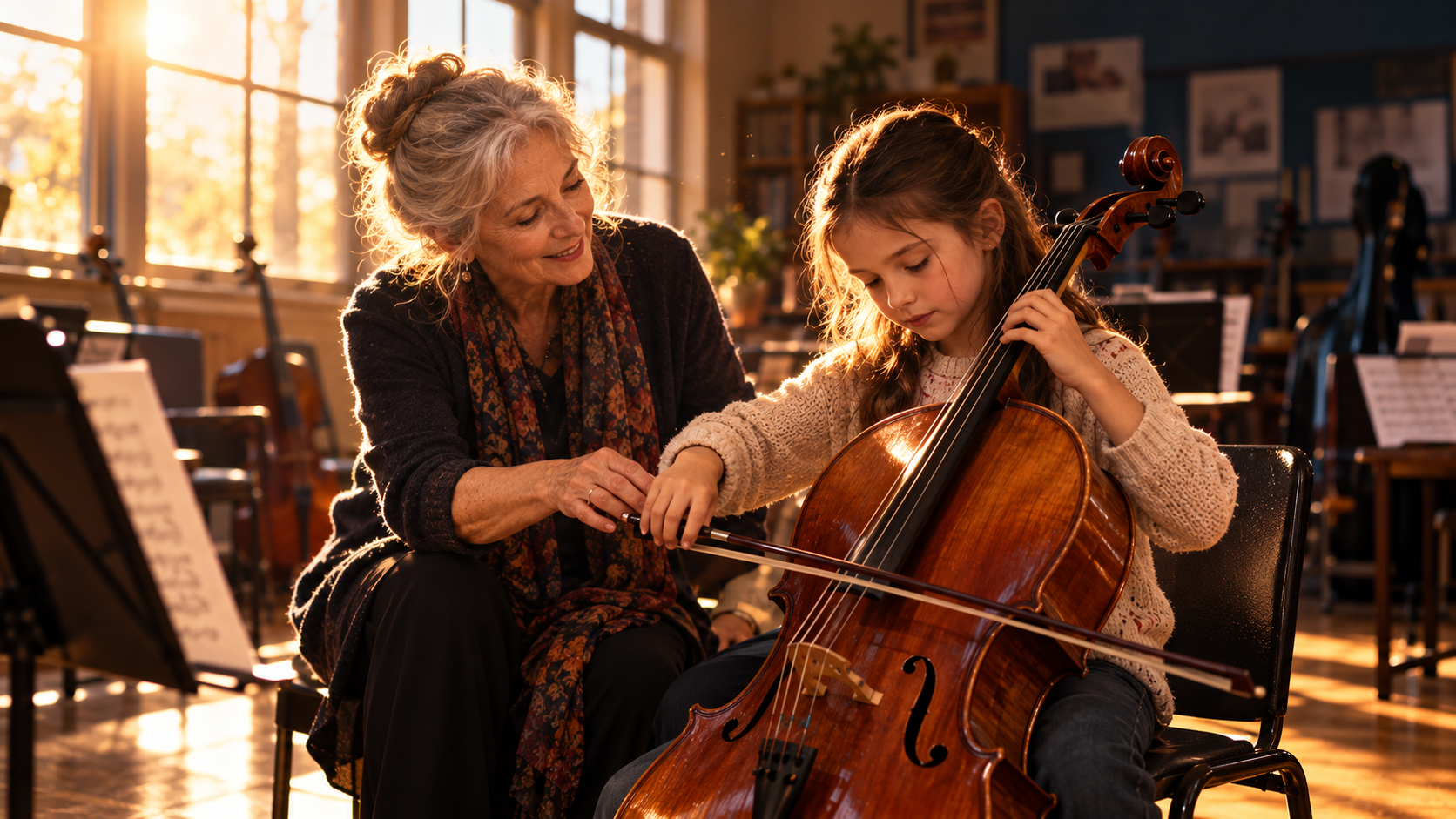
I have remained in the arts for more than three decades partly because I began with enormous advantages. Talent was only one part of my success. I attended Brisbane Girls Grammar School, where music was treated as a serious part of education. My parents could pay for piano, cello, speech and drama, and singing lessons. My mother could drive me to rehearsals, eisteddfods and dance classes. I had excellent teachers, instruments, ensembles and examinations. Excellence and discipline were encouraged and rewarded.
Long before I earned a living from music, a significant investment had been made in allowing me to become a musician.
I am deeply grateful for that. I also know that another child with equal or greater ability may never receive the same opportunity.
The 2026 Music Education: A (Re)Sounding Investment report concludes that many Australian primary school students still have little or no access to quality, sequential and ongoing music education, despite music forming part of the national curriculum.
Creative Australia's latest participation research gives this added significance. It found a strong relationship between learning an art form during the school years and later engagement with and attitudes towards the arts. Access to the arts for children and young people is now the Australian public's highest priority for arts investment.
Zoltán Kodály argued that "music should belong to everyone". That ideal becomes difficult to defend if serious music education is available principally to families able to purchase it privately.
It also raises a larger question about our future workforce and society. If creative thinking is going to become more valuable in an AI-shaped economy, why would we narrow access to the very disciplines through which children learn to imagine, interpret, listen, collaborate, make decisions and tolerate the frustration of not being immediately good at something?
It would be peculiar, at this historical moment, to deprive children of sustained creative education while worrying about the human capabilities an automated world may erode. This is where serious investment must be made.
An artistic inflection point
I do not believe Australia is becoming a country that does not value the arts.
Audience participation tells us otherwise.
Nor is this a simple story in which governments have stopped funding culture or every arts organisation is badly managed. Considerable public investment continues, and flourishing companies, festivals, independent artists and new forms of practice exist across the country.
What concerns me deeply is the direction we are travelling in.
Long-established organisations are closing. Others face shorter funding horizons and rising costs. Commercial musicals are finding that even substantial box-office income may no longer make national touring viable. Some suggest it is simply market saturation. Perhaps this is right but individual artists remain dramatically underpaid compared with the broader workforce. At midlife, when knowledge and experience should carry real value, many artists find that their creative earnings are declining. Arts education remains inconsistent and too dependent on geography and family resources. At the same time, AI is disrupting the market value of creative production.
These pressures are converging.
That is why I believe we are at an artistic inflection point.
The decisions we make now will determine more than which companies survive the next funding round. They will determine whether Australia retains the conditions in which an artist can spend 30, 40 or 50 years becoming extraordinarily good at a craft, and whether audiences can share and celebrate that work.
They will determine whether a child whose parents cannot afford private lessons nevertheless discovers that she is a composer, a cellist, an actor or a playwright.
They will determine whether there are still places where younger artists can work beside older ones and inherit knowledge that cannot be stored adequately in a strategic plan.
They will determine whether we understand that cultural infrastructure consists not only of buildings and organisations, but also of human beings carrying knowledge in their bodies and minds.
Once that knowledge disappears, it is difficult to rebuild.
We have spent a great deal of time asking whether the arts are economically sustainable.
The larger question is whether a society can remain fully human without giving artists sustained opportunities to live with dignity and continue creating, interpreting, imagining and bringing people together through art.
AI will become better and faster, and it will almost certainly become more deeply embedded in our daily lives.
That makes this the wrong moment to retreat from human creativity.
It is the moment to invest in artists, arts organisations and creative education.
The question facing us is no longer simply what will happen to the arts.
It is who we will become without them.
Sources
- 1 Rinaldi, Ray Mark. "The Vocal Economy: Hidden Costs of an Operatic Career." OPERA America Magazine, 11 July 2023.
- 2 Potter, Andrew W. "Why I'm Retiring from Staged Opera at 43." OperaWire, 2026.
- 3 "The Cost of Singing." Opera Magazine, 2020.
- 4 Morrison, Richard. "Jonas Kaufmann: I Can't Afford to Sing at Covent Garden or the Met." The Times, 21 December 2025.
- 5 Throsby, David, and Katya Petetskaya. Artists as Workers: An Economic Study of Professional Artists in Australia. Creative Australia, 2024.
- 6 Creative Australia. Artists as Workers: A Summary and Response. 2024.
- 7 Creative Australia. Creative Transformations: Results of the National Arts Participation Survey. 2026.
- 8 World Economic Forum. Future of Jobs Report 2025.
- 9 Goldsworthy, Anna. The God We Made: The Threat and Promise of Artificial Intelligence. Quarterly Essay 102, 2026.
- 10 Goldsworthy, Anna. "The Threat and Promise of AI: An Extract from Anna Goldsworthy's Quarterly Essay." ArtsHub, 3 June 2026.
- 11 Collins, Anita, and Rachael Dwyer. Music Education: A (Re)Sounding Investment. Music Education: Right from the Start, 2026.
- 12 Predavec, Skye, Morgan Harrington, Alice Grundy and Rod Campbell. The Arts Still Need Reviving: Submission to the National Cultural Policy. The Australia Institute, 2026.
- 13 Australian Taxation Office. "Super for Independent Contractors."
- 14 Watts, Richard. "Is the Creative State Crumbling? Defunded Arts Organisations Fear the Answer Is Yes." ArtsHub, 24 February 2026.
- 15 Blake, Jason. "The Song Company to Enter Liquidation." Limelight, 10 June 2026.
- 16 Smith, Matthew. "Adelaide Theatre Company Slingsby Says Funding Loss Forces Final Curtain Call." ABC News, 26 February 2026.
- 17 Australian Design Centre. "ADC Announcement," 30 October 2025; "Australian Design Centre: End of an Era," 30 June 2026.
- 18 Baumol, William J., and William G. Bowen. Performing Arts: The Economic Dilemma: A Study of Problems Common to Theater, Opera, Music and Dance. Twentieth Century Fund, 1966.
- 19 Baumol, William J. "Performing Arts: The Permanent Crisis." Business Horizons, Vol. 10, Issue 3, 1967.
- 20 Britten, Benjamin. Aspen Award speech, 1964.
- 21 Herboly Kocsár, Ildikó (ed.). Music Should Belong to Everyone: 120 Quotations from the Writings and Speeches of Zoltán Kodály. International Kodály Society, 2002.
- 22 Hyde, Krista L., et al. "The Effects of Musical Training on Structural Brain Development: A Longitudinal Study." Annals of the New York Academy of Sciences, 2009.
- 23 Habibi, Assal, et al. "Neural Correlates of Accelerated Auditory Processing in Children Engaged in Music Training." Developmental Cognitive Neuroscience, 2016.
- 24 Heath, Nicola. "Live Entertainment Industry Calls for Government Lifeline as More Musicals Close." ABC Arts, 9 July 2026.
- 25 Venz, Sophie. "Australian Run of Waitress Closing Early with Sydney Shows Cancelled." ABC News, 28 June 2026.
- 26 Maxwell, Rudi. "Beetlejuice the Musical's Australian Run Coming to an Early Close." ABC News, 20 June 2026.